Choosing the Right Mold Assessor (Mold Tester)
Choosing the right mold assessor can be confusing since the average consumer knows little about the fine points of mold, such as what causes it, how to detect it, how to get rid of it and how to keep it from coming back. There is a wide range of fees that different assessors charge too. Are more expensive ones better? What do you have to lose in hiring a less expensive one?
In order to help you clarify and untangle these concerns, I have written out a short educational primer as to why it is of paramount importance to hire the right assessor and what to look for. As Sy Simms of the menswear store used to say, “an educated consumer is our best customer.”
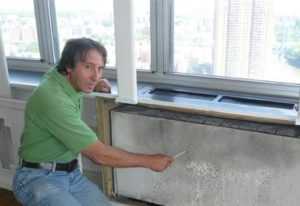
The two most salient qualities to look for in an assessor are experience and integrity. Experience brings a broad and deep knowledge base. There is only so much “book knowledge” one can obtain from classes, and getting a license for mold work in New York State is extremely simple. The bar is set really low. Someone with many years in the field has run into all kinds of problems and has had to research them and work with laboratories to find solutions, so they know what to do in nearly every situation.
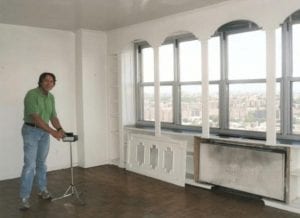 Over 20 Years of Experience in Mold Testing
As far as experience goes, I have been doing mold testing for over 20 years. I began specializing in mold testing in the mid-1990’s to go along with my career as a home inspector.
I have since garnered such a wealth of knowledge in the field that I have consulted for doctors and hospitals, lawyers and appeared as an expert witness in trials. When mold licensing came into effect in New York State, I was asked to essentially teach the class because I had decades more experience than the fellow designated to teach the class!
As far as integrity goes, this is equally a critical quality. What a consumer has to risk by cutting corners and hiring a less expensive mold assessor is essentially not getting the job done that they were looking for, in other words, not actually finding out whether they have a mold problem that is dangerous to their health. Why? It’s simple math. Because in order to assess a mold situation, we usually need to take air samples and send them to a lab for analysis. The lab charges us for each sample, which has to be looked at by a microbiologist who identifies each different type of spore, counts how many of each spore are in a sample, and then enter the data into a program that generates a spreadsheet that gets proofread by another technician and then sent to the assessor.
Mold spores are invisible
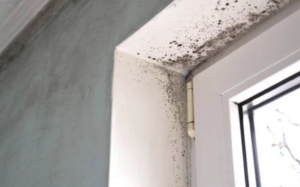 Here’s where the important difference comes in. Mold spores are invisible and not equally distributed in the air. They float through the air and tend to travel in clumps like loose balloons. And they don’t remain in one stationary position. The machine we use to collect the samples can only collect 75 liters of air. That is about the size of a small bedroom. So if you have a large basement that needs to be tested, you would need to divide up that space into sections of about 12 ft x 12 ft to get a sample in each section or you could get a false negative. In other words, if you stick the machine in the middle of the room and take one sample, it is possible, and probable that the concentration of spores is 30 ft away in another area and your test will show that there is nothing there. But go down into the basement after the guy leaves, spend a little time breathing, and you may find yourself coming down with respiratory problems, flu-like symptoms, memory loss, or cancer.
A fair and balanced risk assessment is essential
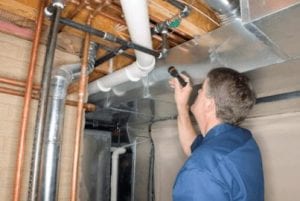 If that’s the case, then why wouldn’t every assessor simply take the proper number of samples? The answer is because since each sample costs them money, they have to charge the client for them too. This would result in a price tag they fear would scare away the client and they wouldn’t get the job. They’d rather make a few bucks at the expense of risking the consumer’s health than telling them the hard facts and charging appropriately. As I said, integrity! The way I do business is, to tell the truth, and if the client doesn’t want to spend the money, then I can’t perform the job for them truthfully unless I include a disclaimer that would essentially nullify the work I did do and the money they wasted. And conversely, there are assessors who generate undue fear by taking far too many samples that aren’t needed and cost the consumer unnecessary expense.
A fair and balanced risk assessment is essential and the appropriate number of site-specific samples are what is required for an honest job.
Integrity is crucial
One more thing about the integrity issue. For several decades, most mold-related services did both testing and remediation. I immediately recognized this as being a conflict of interest because they could be, and often were, generating business for themselves by finding phony high levels of mold so they could charge thousands of dollars cleaning it up. This was even exposed in an expose on NBC’s Today Show. I not only refused to do anything of the kind but used to advertise that I had no conflict of interest. In January of 2016, New York State finally caught up to my standard of integrity and passed a bill that not only required mold testers to be licensed as mold assessors, and mold remediators to be licensed as such, but forbidding anyone to do both testing and remediating. I was 20 years ahead of the curb on consumer protection. Integrity!
And due to the nature of air testing being based upon the volume of air in the high-risk areas, the only way to truly discern the number of samples needed is to be on the job site. Believe it or not, there are assessors who give complete testing prices over the phone, sight unseen! This is a sure sign the consumer is being screwed over. How can you charge someone for something you don’t even know how much it will cost you? In addition, some assessors use cut-rate labs that charge lower fees and generate faulty results in confusing formats. Top, reputable labs will not offer discount prices.
Factors involved in choosing the right assessor
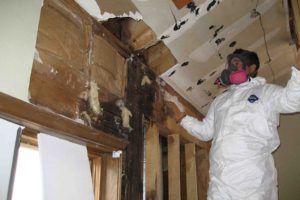 There are many other factors involved in choosing the right assessor. There are the obvious ones like reliability, friendliness, courteous professionalism, ease of reaching by phone without having to always leave voice mail messages, etc. A good assessor will assess the entire house – not necessarily take samples all over, but look for potential hotspots for mold in areas that are notorious for mold problems, such as basements, attics, and bathrooms. Even if they weren’t called in for those other areas, that’s where the actual problem may be lurking. After all, it is the assessor’s job to protect the consumer’s health, and if that involves solving a problem in an area they weren’t expecting, then the results are the same – doing the right job and protecting the client.
Another factor that goes into spending more money for a really good assessor is that if mold is found in an unsafe quantity, the assessor should write a protocol or “action plan” for remediation. Many of these are of very poor quality and does neither the client nor the remediation contractor any benefit. Some have too little specific information and others are overly complicated and confusing. I have been praised for generating very user-friendly reports that are easy to understand and very thorough.
And finally, my reports are holistic in their detail to addressing corrective measures to ensure that a mold problem does not develop in the future, so the client will never have to go through this process again if they follow my guidelines. Since I am also a licensed home inspector, I have a deep knowledge of many other factors that most assessors do not possess, such as structural ventilation variables, water infiltration and grading, impact of external vegetation, sunlight, caulking, inferior or controversial building materials, plumbing defects, and so on.
Conclusion :
In the final analysis, you do get what you pay for. If you try to cut corners, you usually find yourself back with the same problem you started with, only worse. The money you spent on a less expensive assessor will be wasted and you will have to hire someone at greater expense to do the job properly, which you will kick yourself for not having done in the first place.
